
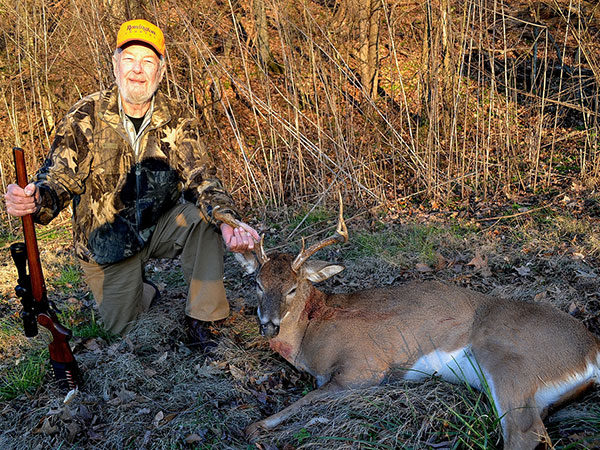
It was the hike from hell! To get into the mountainous fold of land so that the wind would be in my favor required me to go straight up a bluff that was thick with cedar and limestone boulders. Then I had to slide down a steep hillside that was covered with cedars, briers and rocks. I was soon in the rocky crevice I had selected as a stand. It looked into a large white oak covered basin where three hollows came together. Once settled in the rock stand, I glanced down at the little G2 Contender rifle I had assembled just for hunting in the Cumberland Mountains.
Within an hour a large nine point buck came to the low grunts I made and the 7-30 Waters handload I had developed for this semi-custom rifle took the buck cleanly at just under 200 yards. Following that first hunt I named the rifle the Cumberland Deerslayer. Since then the little rifle has taken many deer in the rough Cumberland Mountains of Kentucky, Tennessee and Alabama.
To say the Cumberland Deerslayer is a custom rifle is not correct, for it isn’t. It is a rifle I assembled to hunt a specific region using after market parts and a few friends to help me assemble a short rifle that is perfect for the area I love to hunt. Any hunter can do the same.
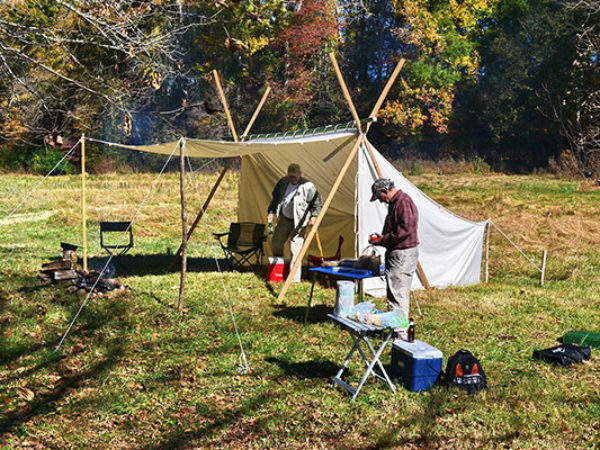
 Baker Tentsmiths[/caption]First about the name and how it came about. According to my research, the name “baker tent” was most likely given to the tent sometime back in the 1800’s. Many logging and survey camps back in those early days used the “Yankee baker oven”, reflector oven as it is called today, to cook meals for hungry work crews and since the tents they used had the same profile soon the tents were called “baker tents”. The name stuck and today most still call this style tent the baker tent.